Exciting Family Adventures Await: Top European Countries to Visit With Your Kids
Travelling with children changes what you notice about a place - the pace slows, the priorities shift, and the things that make a destination genuinely good for families (reliable transport, outdoor space, food without argument) become more important than the things that make it interesting in guidebooks. These countries deliver on both.
France
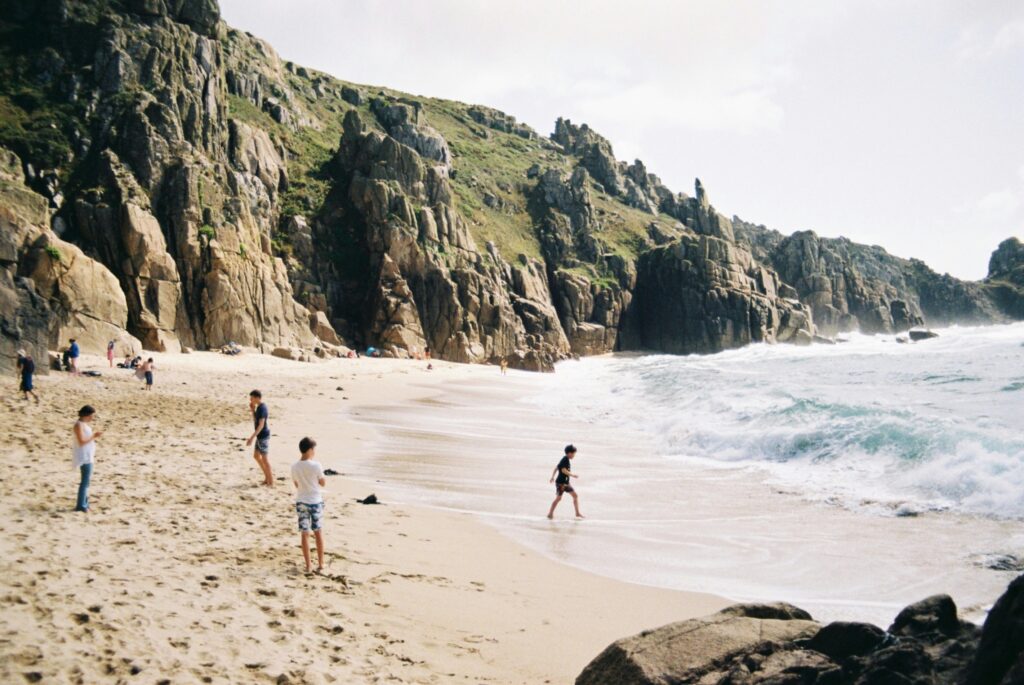
France works for families partly because its infrastructure for visitors is so well-developed and partly because children are taken seriously in French food culture rather than handed a separate menu of beige options. Paris is the obvious starting point: the scale of the city is manageable with children if you base yourself in a central arrondissement and use the metro rather than walking everywhere. The Musée d'Orsay has a family trail through the Impressionist collection that avoids the problem of dragging children through galleries with no entry point; the Cité des Sciences et de l'Industrie at La Villette is explicitly designed for children and large enough to fill a full day. Outside Paris, the Loire Valley's density of castles - Chambord alone has 440 rooms and a double-helix staircase that children find immediately compelling - makes it probably the best region in France for families with primary-school-age children.
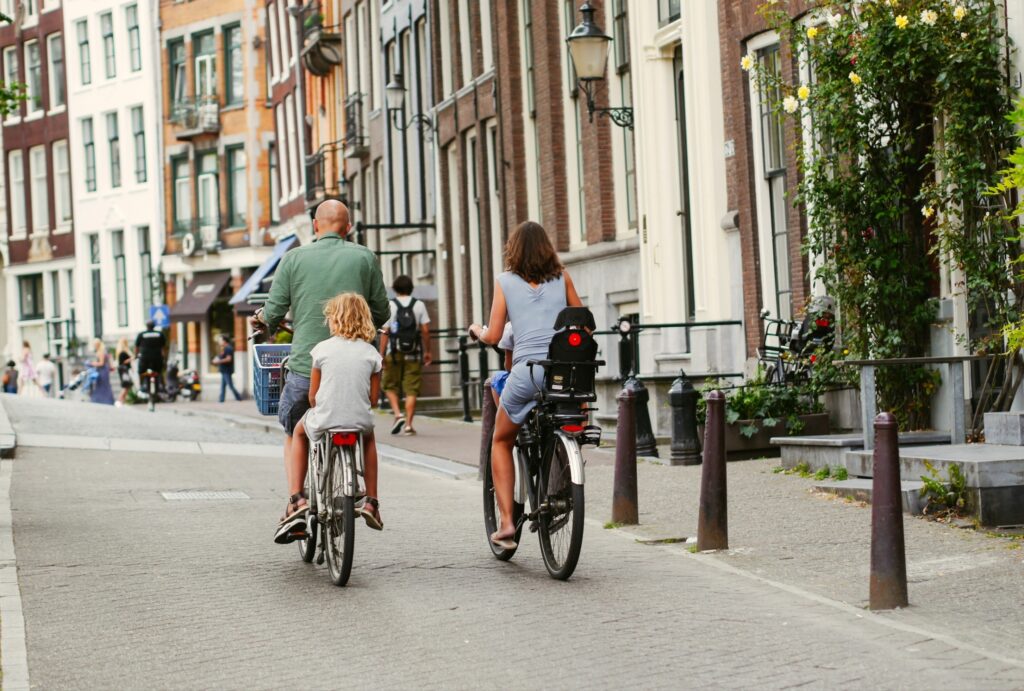
The Paris to Amsterdam train on the Thalys service takes around one hour and twenty minutes and makes France and the Netherlands naturally combinable in a single trip. Amsterdam with children is a city that functions at child height in a way that many European capitals don't - the canal-side streets are car-free in large sections, bike paths run everywhere, and the NEMO Science Museum by the waterfront is five floors of interactive exhibits with queues that move quickly. Combining a few days in Paris with a few in Amsterdam via rail makes for a straightforward itinerary that covers two distinct urban experiences without the friction of airports.
The Netherlands
Amsterdam is where most families enter the Netherlands, and it's worth extending the stay beyond the city. The Keukenhof gardens near Lisse are open for eight weeks in spring and the tulip fields surrounding them are accessible by bike from the site entrance - a combination that makes the slightly kitsch business of looking at flowers genuinely enjoyable. Zaanse Schans, 20 minutes from Amsterdam by train, is a preserved windmill village on the Zaan river where working mills produce oil and mustard and the wooden houses have been relocated from around the region; it handles large numbers of visitors without feeling entirely theme-parked. The coast at Zandvoort and Scheveningen (near The Hague) is accessible by train from Amsterdam and offers straightforward beach days with the North Sea running cold and the beach cafes running all day.
United Kingdom
The train from London to Liverpool takes around two hours and fifteen minutes and connects two cities with different characters that complement each other for a longer UK trip. Liverpool's waterfront - the Albert Dock, the Beatles Story, the Tate Liverpool - is compact enough to cover on foot over two days, and the Merseyrail network makes the surrounding area easily accessible. Further north, the Lake District is three hours from London by train to Oxenholme and offers outdoor activity at a scale that children can manage: accessible fell walks, lake swimming at Windermere and Coniston, and a network of family-friendly paths that don't require specialist equipment.
Britain's combination of free national museums, reliable rail connections, and a coastline that varies from Cornish coves to Scottish sea lochs makes it a practical destination for families at different stages. London's museums - the Natural History Museum, the Science Museum, the British Museum, the V&A - are all free and all substantial enough to anchor a day without supplementary activity. The Natural History Museum's dinosaur gallery and the Science Museum's interactive floor for younger children are the most reliably successful, but the museums are large enough that a family can split and reconvene without the whole enterprise collapsing if one child's interests diverge from another's.
Germany
Germany's family credentials rest partly on its theme park infrastructure - Legoland Germany, Europa-Park, Phantasialand - but the country's best offering for families is its cities, which are clean, well-organised, and built around public transport that makes getting around with children low-stress. Munich is the most family-tested entry point: the Deutsches Museum is the largest science and technology museum in the world and the children's section alone is a full day. The English Garden in central Munich is larger than Central Park and has a river surfing wave, beer gardens, and space to run without agenda.
Rothenburg ob der Tauber on the Romantic Road is the town that appears on more children's picture books than any other German location - the medieval walls are intact, the half-timbered houses are exactly as imagined, and the Christmas Museum is open year-round. It tips toward the precious if you stay too long, but a single night with children is close to ideal: the walls can be walked in an hour, there's a medieval crime museum with a torture chamber that pre-teens find appropriately alarming, and the town is small enough to feel safe and contained in a way that urban destinations don't.
Italy
Italy presents families with a calibration problem: how much history and art is the right amount before you lose the children entirely. The answer varies by age, but a general principle holds - mix the compulsory cultural stops with things that operate on a different register. In Rome, the Colosseum is effective with children because it's a ruin at human scale that they can move through and imagine; the Forum next to it is harder going. In Florence, the Uffizi requires advance booking and a focused two-hour visit rather than a marathon; the Boboli Gardens behind the Palazzo Pitti give children outdoor space directly adjacent to the museum if they run out of patience before the adults do.
The Italian coast solves a lot of problems. Cinque Terre hiking between the villages (the easier trails connecting Monterosso to Vernazza and Manarola to Corniglia) gives children movement and destination at the same time; the swimming from the rocks at Vernazza and Manarola is excellent in August. Sicily works particularly well for families with older children - the Valley of the Temples at Agrigento, Mount Etna accessible by cable car and 4WD, and a food culture where eating well is non-negotiable at every price point. The ferry between the mainland and Sicily is an event in itself, and taking the overnight from Naples with a cabin rather than flying is the kind of decision that becomes a family story.
Here are some additional resources to plan your trip to Italy.
Conclusion
The best European destinations for families tend to be the ones that don't require everything to go perfectly - places with enough variety, enough outdoor space, and enough transport flexibility that a bad afternoon doesn't ruin the trip. Every country here has that quality in different proportions. Pick the combination that fits your children's ages and interests, build in more recovery time than you think you need, and treat the unplanned moments as part of the itinerary.